
Outsourced talent has thus become an essential workforce strategy that every company must pursue if it wants to scale and compete effectively. The increasing growth of the outsourcing industry (the estimated market size of which stands at $525 billion in 2030) makes it very pertinent that it is highly important to know the skills that have the maximum value.
This article breaks down the top skills in demand for outsourced staff using a clear, structured approach. It includes definitions, lists, statistics, and real-world insights-all aligned with the same format as your previous blog.
What do you mean by “Skills in Demand”?
Skills in demand refer to the skills, whether hard or soft, that the company is looking for when hiring workers to fill outsourced jobs.
By outsourcing staffing solutions, such abilities enable groups to work efficiently and effectively towards achieving business objectives, irrespective of geographical boundaries.
It keeps businesses informed on which skills will be most valuable in the marketplace and ensures employees and contract workers develop a competitive skill set on a global scale.
Why Skill Demand Matters in Outsourced Staffing
Outsourcing opens the frontiers of a global pool of talent for organisations. But talent delivers its value only when it has the right skill set.
Here is what businesses stand to gain by setting up in-demand skills:
- Greater productivity and higher output
- Faster onboarding, lower cost for training
- Lower turnover, higher retention
- Better adaptability to changes in the market
It is important, given that companies are increasingly dependent on flexible workforces or skills-based hiring strategies.
Core Skill Categories for Outsourced Staff
Big firms categorise the required competencies of their outsourcing workers into two groups, namely:
- Technical (Hard) Skills
- Soft (Interpersonal) Skills
Both types of skills are imperative, where technical skills help one carry out tasks, and soft skills help in working together towards meeting goals and objectives.
Top Technical Skills in Demand
Technical skills are task-specific and help contribute to measurable success when acquired by outsourcing professionals.
Here are the most in-demand technical skills for each of the outsourcing areas that are widely sought after:
1. Technology & IT-Related Skills
Tech outsourcing has become mainstream, with a staggering 92 % of big worldwide firms opting for IT outsourcing.
In this space, important technical skills would be:
- Cloud Computing Platforms (AWS, Azure, GCP)
- Cybersecurity and risk management
- Software development frameworks and languages
- Data analysis and reporting
- DevOps and automation
These skills are utilised in helping to support infrastructure, provide secure environments, and help design scalable solutions.
2. Digital Marketing & SEO
Marketing outsourcing remains on an upward trend as more and more business organisations invest in digital growth.
Best marketing skills to be outsourced:
- Search Engine Optimisation (SEO)
- Pay-Per-Click
- Social Media Strategy
- Content creation and copywriting
This skill set enables businesses to target audiences effectively, especially in the global market.
3. Customer Support and Communication Technology
Customer service is one of the most outsourced business sectors because of its scalability:
- Capability to support multiple languages
- Help desk software (Zendesk, Freshdesk, etc.)
- CRM platform skills
The customer service departments outsourced for the aforementioned skills would be able to handle global volume while also ensuring that the key requirements for satisfaction and responsiveness are being fulfilled.
4. Finance & Accounting Expertise
Outsourced financial roles are often those that require specialised technical skills, such as:
- Bookkeeping and reporting software
- Tax compliance tools
- Payroll processing systems
The finance skill enables companies to ensure more accuracy, compliance, and cost-effectiveness.
5. HR & Recruitment Tools
Human Resource outsourcing also demands support for specialised technical skills, such as:
- Applicant tracking system (ATS)
- HR information systems
- Payroll and benefits administration platforms
These skills help organise and facilitate hiring processes, as well as manage personnel.
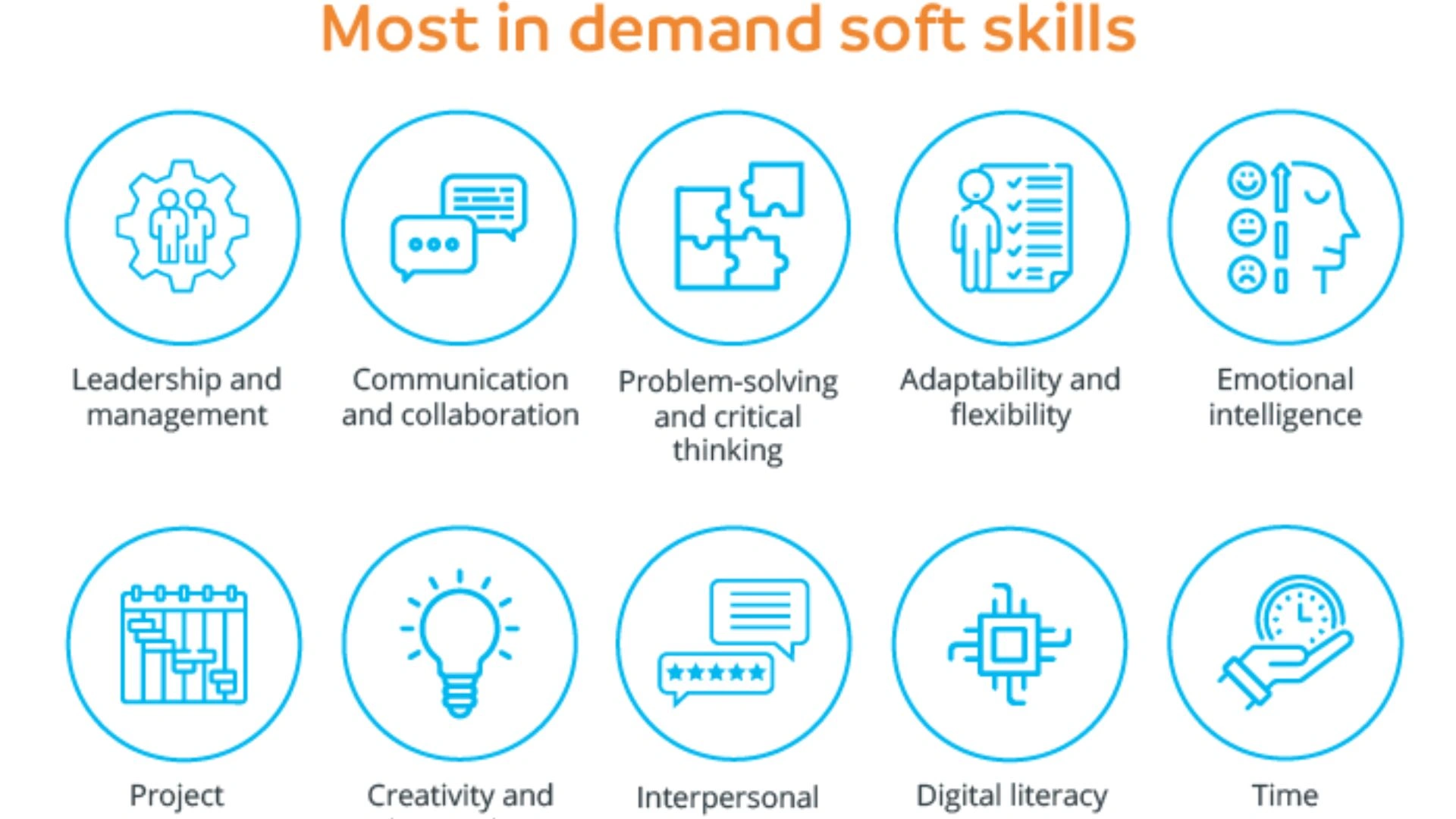
Top Soft Skills in Demand
Soft skills, also known as interpersonal or human skills, are equally important in outsourcing manpower to other companies in terms of hard skills.
These are some of the most sought-after qualifications:
1. Communication Skills
Effective communication is critical to teamwork, and this is important for remote teamwork, especially when carried out among different cultures and time zones.
Effective communicators can:
- Break down complicated concepts into simpler terms
- Being transparent with stakeholders
- Prevent misunderstandings leading to time and money waste
Communication skills also facilitate customer relations and teamwork.
2. Time & Project Management
Deadline and deliverables management is very important in outsourcing, as there could be many clients and projects being handled.
Contract employees are competent in time management:
- Keep organised while under pressure
- Emphasise the ability to work
- Provide consistent results
It avoids bottlenecks and enhances productivity.
3. Problem Solving & Critical Thinking
They are expected to do troubleshooting on their own without close monitoring.
This requires:
- An analytical mind
- Capabilities to present solutions promptly
- Handling ambiguity with Comfort
Time is saved, and robustness is enhanced by problem solvers.
4. Cross-Cultural Collaboration
Remotely and outsourced teams tend to be global in nature. To successfully collaborate in multicultural settings, it is necessary to do the following:
- Team cohesion
- Customer engagement
- Eliminating miscommunications
This is an important skill for facilitating cooperative and efficient relationships.
5. Adaptability & Continuous Learning
The working world is undergoing rapid changes, especially when it comes to technology and markets, where changes occur frequently. Employers place a high value on workers who have the following qualities:
- Acquire new tools efficiently
- Adapt when adapting project requirements
- Stay current with industry trends
This thinking is consistent with the truth that 70 % of the skills of the workforce are going to shift by 2030.
How to identify in-demand skills for your Outsourced Team
Want to assess which skills your business should focus on when hiring outsourced staff? Follow these steps:
- Business Objective Analysis
Establish goals that outsourcing is intended to support, such as growth, cost reduction, and innovation.
- Map Required Competencies
List the technical and soft skills necessary to achieve those objectives.
- Assess Current Skill Gaps
Compare existing team skills with what the business needs.
- Market demand research
Utilize labor reports, industry insights, and outsourcing benchmarks.
- Skill First vs. Credential Counts
Focus on demonstrative abilities, not merely resumes.
- Define the Evaluation Criteria
The platform will include both technical tests and soft skill assessments.
- Performance Tracking & Feedback
Follow through on the expectations set by the outsourced team and make adjustments accordingly.
This structured process ensures that your outsourced team brings real value in alignment with measurable goals.
FAQs
1. Which skills are the most transferable to outsourcing and the like?
Skills such as communication, problem-solving, and project management are often transferable.
2. How do soft skills influence outsourcing success?
Soft skills enhance teamworking activities, prevent miscommunications, and promote dependability; all of these are essential in teleworking contexts.
3. Have there been any changes in recent demand for particular skills?
Yes, digital literacy, data analysis skills, and teamworking skills are becoming even more important in the face of automation and technological changes.
4. How can businesses effectively evaluate talent sourced through outsourcing?
Through the use of assessment, criteria, and testing, and having stopped relying on resumes and degrees.
Also Read:
Top Financial Advantages of Staff Outsourcing for Businesses