
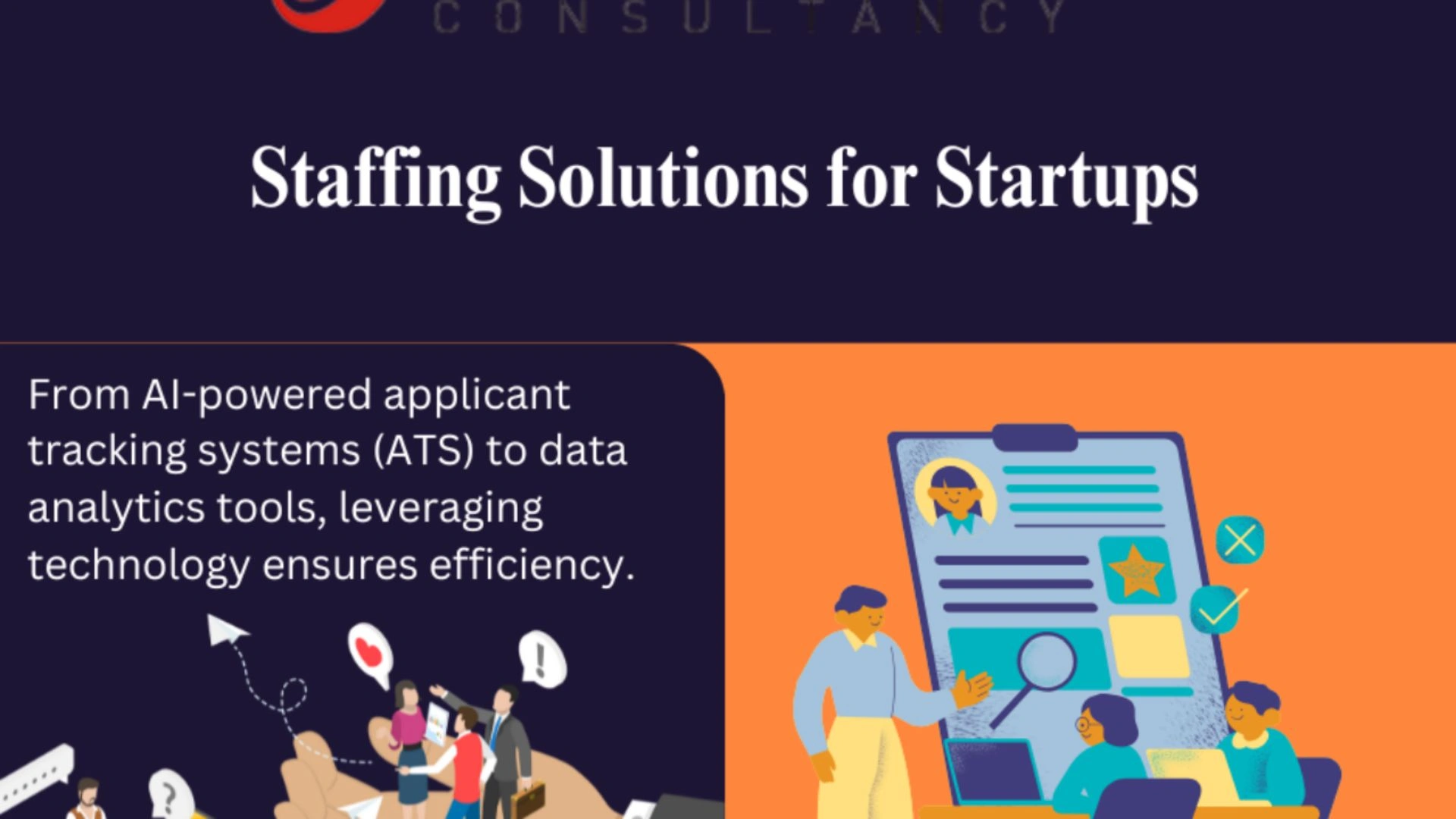
Startups present a challenge in building a great team quickly in a limited timeframe because of talent competition. Conventional recruiting processes in such a setup fail to deliver effectively. Statistics provided in a recruitment survey estimate a challenge in talent search at 74%, and it takes about 44 days to fill a post.
Staffing solutions are of high importance to a start-up with a greater objective of scale, growth, and increased quality and productivity while still being profitable and stable. In this article, the best possible solutions and tips that a startup can consider will be outlined and explored to help the business overcome some of the issues revolving around staffing.
What are Staffing Solutions for Startups?
Staffing solutions would entail techniques and infrastructure that assist start-ups in acquiring, onboarding, and retaining staff. Such solutions would encompass recruitment, outsourcing of staffing, contract staffing, and staffing options that involve freelancing and allied concepts.
For start-ups, talent solutions go beyond filling employment gaps and work towards building a talent force that drives growth and change.
Why startups need tailored staffing strategies
There are several ways in which startups are different from existing businesses. They are differentiated in the following ways:
- Resource constraints
- Rapid innovation cycles
- Seasonal or Fluctuating Workload
- Need for specialized skills
The conventional recruitment process may be too slow and too pricey when speed and flexibility are necessary for survival and growth.
These solutions ensure that startups remain competitive while staying focused on their mission.
Core strategies of staffing solutions
Startups can select from a variety of options for staffing approaches, each providing varying goals and needs:
- Traditional Internal Hire
- Contract & Freelance Staffing
- Outsourced Recruiting & Staffing Agencies
- Fractional Talent
- Hybrid Talent Models
Each of these solutions has its own advantages, based on the phase and strategic needs of the startup.
1. Internal Hiring: Building a strong core team
Internal recruitment, or hiring full-time staff, continues to remain a cornerstone of startups.
Benefits include:
- High Cultural Relevance
- Long-term employee investment
- In-house expertise and continuity
Still, internal recruitment can also prove to be slow and costly, especially for a startup, as they lack the infrastructure and recognition in the Human Resource sector.
Startups need to focus on internal talent acquisition for key positions that constitute the startup’s core (for instance, key management positions, key engineering talent).
2. Contract & Freelance Staffing
Leveraging contract talent adds flexibility with no obligation of long-term employment.
Main Advantages:
- Rapid deployment for short-term projects
- Lower overhead costs than full-time employees
- Best used for special or occasional work
Contractor staffing services are most valuable in technical development, marketing activities, or when addressing growth periods.
This on-demand talent pool is a manifestation of the shifting paradigm towards a contingent work environment where organisations rely on professionals on a needs-basis while maintaining control over expenses.
3. Outsourced Recruiting & Staffing Agencies
Some startups hire other agencies that are involved in staffing.
Outsourced staffing solutions for startups assist in the following ways:
- Finding qualified candidates quickly
- Recruitment workflow management
- Time-to-hire
In reality, a significant number of recruitment managers across the globe have relied on staffing companies to address problems associated with talent deficits, talent surges, and hard-to-find specialised knowledge.
Outsourcing Recruiters vs Fractional Recruiting
The usual cost of traditional recruitment agencies is between 15% and 30% of the candidate’s first-year salary, which may be very costly for newly set-up startups.
This would make outsourced staffing an option that takes into account quality and budgetary concerns.
1. Fractional Talent: Specialised on-demand experts
Fractional talent is professionals working with the startup for part of their time or for given deliverables.
The reasons why startups employ fractional talent:
- Access to senior expertise without full-time costs
- Project-based engagement
- Aids in scaling strategy, leadership, or skill
Startups can utilise fractional capabilities in such areas as CMO, CFO, top engineers, and product leads. These are typically tasks for experienced professionals, but may not necessarily require their full-time attention during the initial phase.
2. Hybrid Workforce Models
A hybrid workforce blends internal employees with contractors, outsourced talent, and fractional contributors.
This method has the following advantages:
- Scaling teams up or down is flexible.
- A blend of long-term and short-term expertise
- Expansion without heavy infrastructure investment
Hybrid models also enable startups to focus on core competencies and experiment with flexible teams for auxiliary functions.
Choosing the Right Staffing Solution
Here is a simple framework startups can use to make a call on which staffing solution fits their needs:
- Define Hiring Objectives: What skills and roles does it really need today?
- Assess Urgency: How fast do you need to fill the position?
- Budget Assessment: How much can you afford to allocate to hiring and retention?
- Competency Gap Analysis: Which competencies are not available in-house?
- Resource Availability: Do you have HR capacity to manage recruitment?
- Choose Staffing Mix: identify one or more solutions that fit goals.
- Track and Adjust: Measuring performance and doing iterations as the startup evolves.
The structured approach makes sure that staffing decisions support growth without costly missteps. This is where 6 Pence can assist you the best.
Common Staffing Challenges Startups Face
Startups face several challenges when recruiting staff:
- Limited brand recognition makes it harder to attract talent.
- The budget constraint: Much smaller budgets compared to mature companies.
- Skill shortages, mostly in the spheres of tech, marketing, and product roles
- Speed to hire: Recruiting processes can drag on.
That is to say, extended time-to-fill roles often result in 30–45+ days and therefore protract growth momentum and stretch out product timelines.
A proper staffing solution lessens these challenges with its speed, expertise, and cost-effective alternatives.
FAQs
1. Which staffing solution is a startup supposed to use first?
These startups must adopt internal hiring for core leadership and product roles, and seek outsourced and contract options for filling specialised skills or time-sensitive needs.
2. Should staffing agencies be worth it for startups?
Absolutely, staffing agencies help reduce time-to-hire and access skills that are particularly valuable for niche areas when the internal HR is not established.
3. How does a startup minimise hiring costs?
Yes, through fractional recruiting, contract staffing, and by outsourcing recruitment tasks, much of the fees and internal overheads can be reduced.
4. What’s the biggest risk of poor staffing choices?
Poor staffing delays projects, increases churn, burdens internal teams, and diverts focus from growth priorities.
Also Read
Top Skills in Demand for Outsourced Staffing for Businesses
Top Financial Advantages of Staff Outsourcing for Businesses