

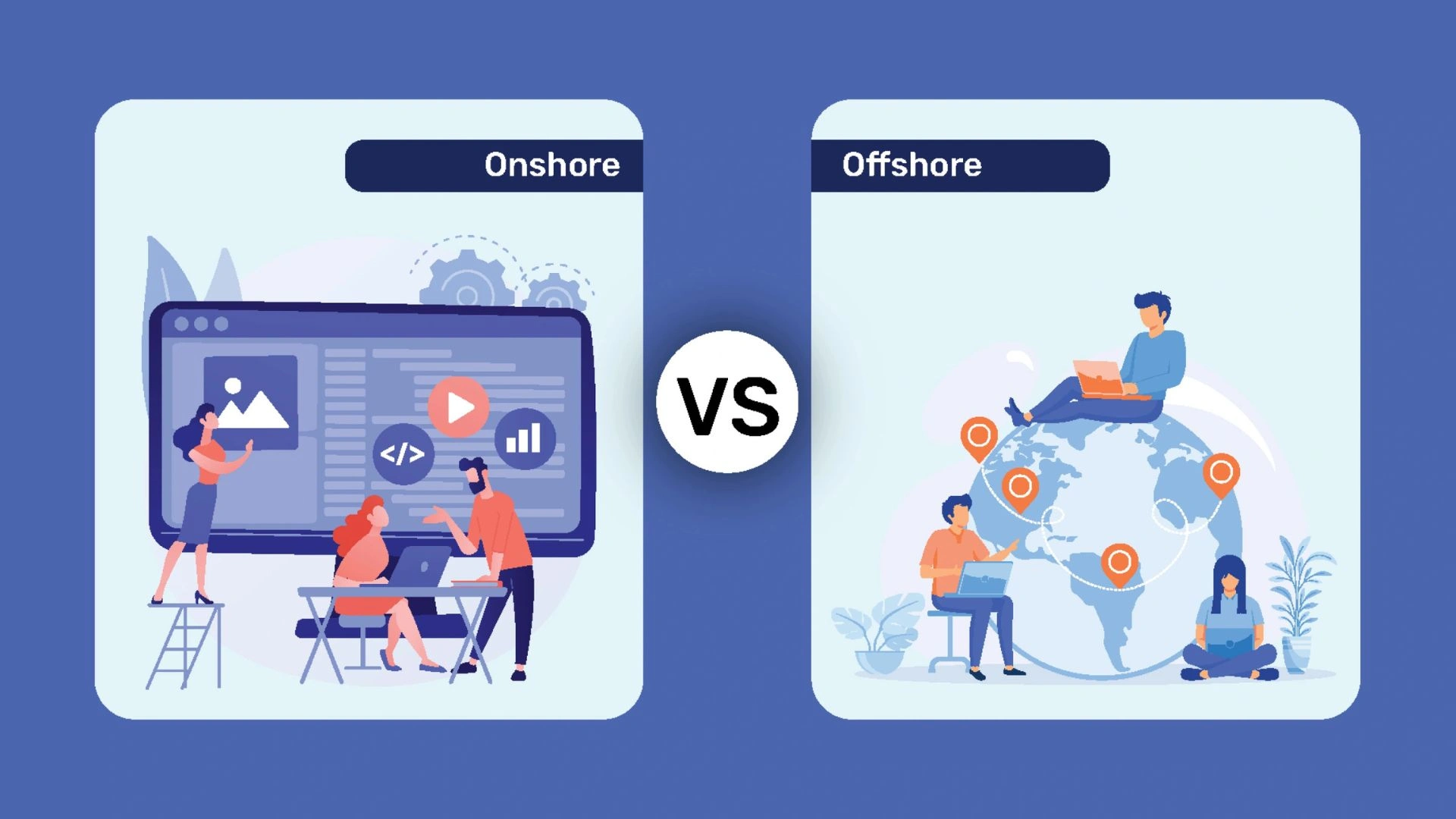
Outsourcing has become more than just a cost-cutting move for most enterprises, as it also opens the door to highly skilled professionals and better streamlining of operations. Companies nowadays decide between on-site outsourcing and offshore outsourcing models based on their expectations, project needs, and financial plans.
The outsourcing industry is also expanding at an exceptional pace in the Gulf region. The worldwide outsourcing services sector has shown tremendous growth, indicating the increasing dependence on third parties for various business activities.
In this article, we discuss on-site and offshore outsourcing models, what makes them different, the advantages and disadvantages of each, and some facts and figures that reflect the current usage of these models by businesses.
Why do companies use outsourcing?
The increasing popularity of all industries has led to many companies turning to outsourcing as a means to improve efficiencies and cut operating costs. As it has evolved from just a way to save money, it is now one of the most strategic ways to keep businesses competitive by allowing them to concentrate on their core business operations.
Key advantages of onsite outsourcing
- Easier Communication and Collaboration
One of the main benefits of the teams being in the same country is that they speak the same language, share the same culture, and are in the same time zone. All this contributes to making communication a lot easier. With lesser chances of communication breakdowns, project coordination can be taken to a feature level.
- A Stronger Legal and Data Protection
Most of the time, onshore outsourcing services are regulated by the same national laws, so they can ensure more comprehensive protection of secrets and intellectual properties.
- Better Quality Assurance
It is quite common that globally based teams face tremendous challenges in companies with respect to communication and getting their performance monitored, meetings conducted, and projects overseen. These challenges are significantly reduced with local teams.
Challenges of on-site outsourcing
Despite the advantages of onsite outsourcing, there are some issues as well.
1. Higher Costs
Onshore outsourcing is generally the priciest option because of higher wages, employee benefits, and other overhead costs.
2. Limited Talent Pool
Businesses are limited to the talents that exist in their country. This might lead to difficulties in finding very specialised skills.
Key advantages of offshore outsourcing
- Greatly Reduced Costs
Cost-cutting is by far the main reason why companies decide to outsource on an offshore basis. Outsourcing to a cheaper region can help companies cut labour costs.
- Getting Talent from All Over the World
Offshore outsourcing gives firms an opportunity to reach out to experts who are not available locally. The following are examples of areas where such skills are essential:
- Software development
- Data analytics
- Customer support
- Engineering services
3. Ability to Change Size and Working Hours
Offshore workers give enterprises a chance to adjust the size of their operations in a matter of days without having to open new premises. Thus, it is possible to cope with the different work pressures.
Challenges of offshore outsourcing
While outsourcing to offshore locations may be a great decision for a project, the downsides are in there too.
- Time Zone Differences
When taking a project in different time zones, the communication and coordination between the teams can be slow, and therefore delay the entire process.
- Culture and Language Barriers
Using different cultural norms and communication styles can lead to misinterpreting the messages in some cases.
- Hidden Costs
Sometimes the costs could rise due to loss of productivity and difficulties in coordinating. Offshore projects may encounter extra expenditures because of productivity losses or coordination issues.
Key differences between onsite and offshore outsourcing
| Feature | On-site (onshore) outsourcing | Offshore outsourcing |
| Location | Same country | Different country |
| Cost | Higher labour costs | Up to 60-70% savings possibility |
| Communication | Easier collaboration | Potential time-zone challenges |
| Talent pool | Limited to the local workforce | Access to global expertise |
| Compliance | Same legal framework | May require international compliance management |
| Scalability | Moderate | High scalability |
How to choose the right outsourcing model?
Thinking through how work gets done outside the company means looking at several pieces first.
- Establish Project Needs
Decide if the project demands very frequent interactions or if the skills required are very specific.
- Check Financial Limitations
Generally, offshore outsourcing is more cost-effective, whereas on-site models are geared towards maintaining quality control.
- Study Talent Pool
Think about whether the necessary expertise can be found locally.
- Determine Communication Requirements
When teams must communicate constantly, being in the same location often works better. Remote setups can struggle with real-time coordination, making physical presence a practical choice.
- Consider Legal and Compliance Risks
Start by checking laws that might affect how information is handled. See whether rules about privacy fit into what’s planned. A good setup follows legal steps without skipping details. Watch out for limits set by authorities when sharing or storing records. Rules change, so plans must stay flexible enough to adapt. Mistakes here could lead to serious consequences later on.
- Test the Partnership
A trial run might reveal how well the partnership works. One short task could show if teamwork feels right.
- Evaluate Performance Measurements
Success shows up most clearly through lower costs. Productivity gains tell part of the story, too. Hitting delivery timelines matters just as much. What counts comes down to how well each piece moves together without delay.
FAQs
- What is the main difference between on-site and offshore?
The major difference between the two is in the location of the outsourcing. On-site means the same country. Offshore means another country.
- Why do firms pick offshore?
Mainly to save money, businesses go offshore.
- Is on-site more dependable?
Often yes. Since the outsourcing happens locally, there is a sense of trust and accountability.
- How big is the global market?
The global market is growing at a rapid pace every decade.
Also Read:
Background Verification Process in HR