
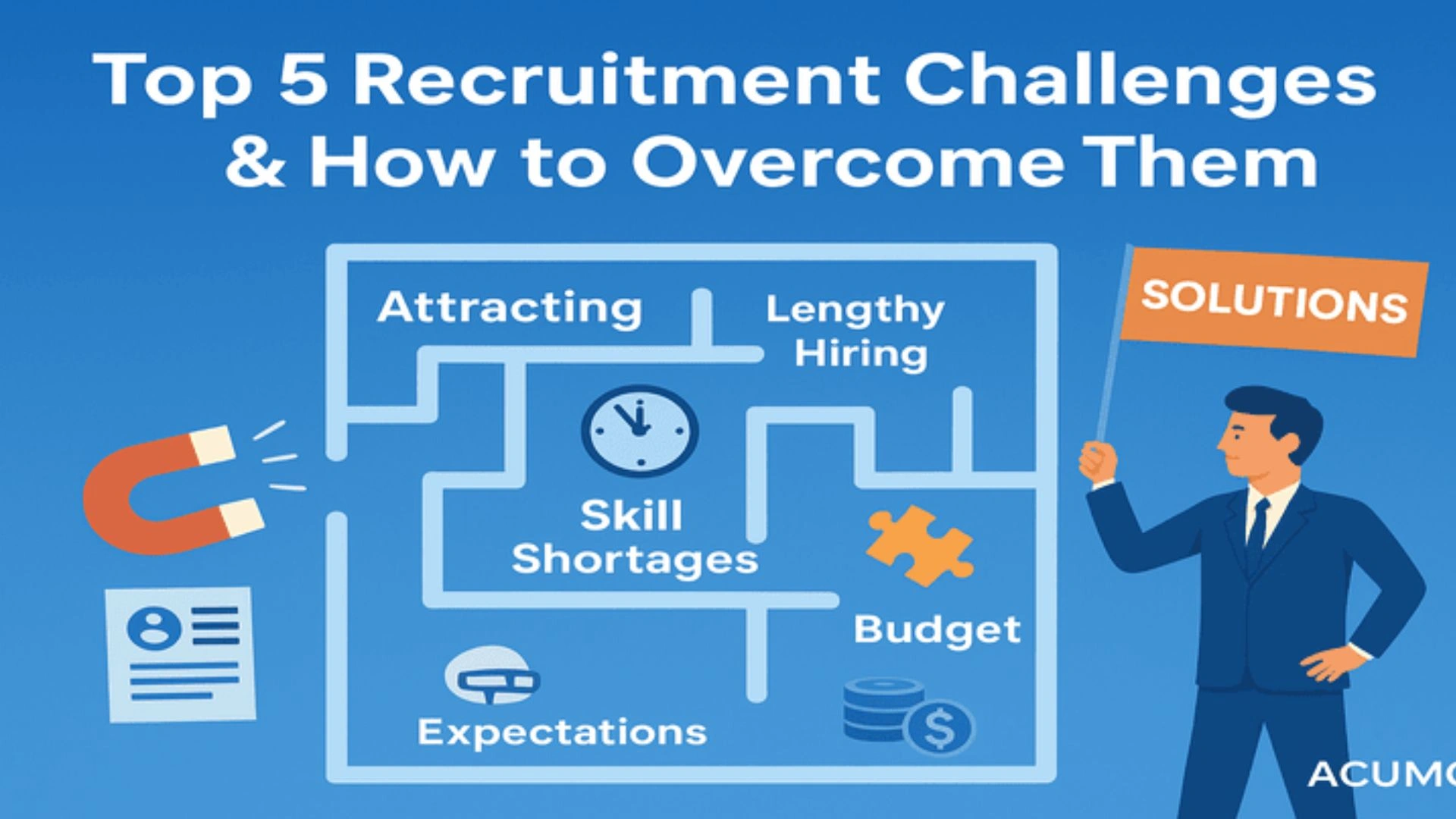
The Middle East, and especially the MENA (Middle East and North Africa) region, is a dynamic and fast-growing labor market. Several factors, including fast economic reform, huge projects, and expansion in industries such as technology, tourism, and logistics, are demanding more workers.
However, hiring professionals and companies still come across certain specific difficulties when they want to attract and retain qualified employees in this region.
Here, we analyse the major issues in the Middle East recruitment sector with the help of reliable data and real-world context.
What is the MENA Recruitment landscape?
The MENA region covers several countries, including Saudi Arabia, the UAE, Qatar, Egypt, Morocco, etc. There is a very diverse and large workforce in the region, mainly comprising expatriates and migrant workers, along with the local talent pool and young professionals.
However, fast development has led to competition for limited skilled workers, escalated candidate expectations, and enlarged complexity of recruiting procedures.
Why recruitment is hard in the Middle East
Numerous reasons make recruitment in the Middle East a difficult task:
- Rapid economic development is far ahead of the availability of skilled workers
- Multi-layered labour markets with different legislations
- Employment of migrant workers is a significant factor
- There is a great competition for specialised skills
- Candidate expectations are changing rapidly, in line with global trends.
These are the chief obstacles raised by employers, recruiters, and market professionals.
Shortage of skilled workers
The scarcity of capable workers, most particularly in the fields of technology, engineering, healthcare, and roles requiring a high level of expertise, is probably one of the issues most frequently discussed in the media.
Regional research indicates that close to 50% of the employers in the UAE and over 50% of the employers in Saudi Arabia are experiencing a shortage of qualified people. This situation leads to a slower hiring process and higher costs.
The shortage of skilled labour is mainly due to:
- Very fast development of the tech and infrastructure sectors
- The education system graduates are unprepared for the needs of the work market
- The high need for very specific skills, e.g., in AI, data science, and cybersecurity
When the supply of skilled people cannot meet the demand, the companies get involved in a bidding war for the existing talents by paying them higher salaries, they have to allow greater time for the completion of the recruitment process, and at times, they are forced to make compromises by choosing less qualified candidates. All these factors contribute to the deterioration of talent outcomes.
Inefficient and traditional hiring processes
Multiple sources have identified old recruitment techniques as one of the major issues in the Middle East. Mainly, these challenges were the focus of:
- Performing manual screening and using outdated techniques for assessment
- Delayed onboarding because of paperwork and compliance steps
- Being dependent on paper documents or isolated job boards that do not interact
Regional hiring benchmark statistics reveal that the time to fill metric is quite high, with some positions requiring more than a month to be closed, even exceeding many global averages.
Such a lack of efficiency may disappoint candidates and put at risk the employer’s good name even before the hiring process is finalised.
Weak employer branding
Many companies in the Middle East lack sufficient investment in employer branding, and attracting and retaining top talent becomes a real struggle for them.
Employer branding is essentially how a company markets itself to potential employees. This entails the company culture, values, opportunities for career progression, pay, and working conditions.
When companies do not have a compelling brand, it is usually difficult for them to:
- Attract high, skilled professionals
- Provide clear communication on career development
- Involve diverse groups of candidates
Strong employer branding becomes crucial, especially in areas where there is stiff competition for talent, like in the case of the GCC market.
Cultural and language barrier
To a large extent, one of the biggest issues many companies in the Middle East face is that they do not invest enough in employer branding. As a result, attracting and retaining top talents become real challenge for such organisations.
Employers brand, in simple words, is how a company employs marketing to attract potential employees. It may include the company’s culture, values, career opportunities, salary, and working environment.
Without a strong brand, it is generally very difficult for companies to:
- Attract top-skilled professionals
- Provide clear communication on career development
- Involve diverse groups of candidates
Strong employer branding thus becomes a must-have, especially in locations where there is a challenging competition for talent, like in the case of the GCC market.
Evolving candidate expectations
Similar to the worldwide market, job seekers in the Middle East want good career opportunities, work from home, and clear communication. A recruiter who does not change will lose candidates to the competition that moves faster.
How employers can overcome these challenges
Below is a step-by-step approach that any company can use to significantly improve its recruitment in the Middle East.
- Map Skills Demand vs. Supply
Recognise crucial skills shortages and focus on workforce planning accordingly.
- Modernise Hiring Tech
Implement applicant tracking systems, utilize AI-powered screening, and conduct data analytics.
- Build a Strong Employer Brand
Present the organisation’s values, perks, and opportunities for career growth in a straightforward manner.
- Support Local Talent Development
Collaborate with educational institutions and training providers to nurture the talent pool.
- Enhance Candidate Experience
Optimise communication, shorten the hiring cycle, and make the application process easier.
FAQs
1. Why is the Middle East experienced workforce shortage?
The current boom in technology and infrastructure sectors has gone far ahead of the talent pool. At the same time, educational institutions’ industry alignment is generally behind the nature of the world’s needs.
2. How do employer branding issues hinder talent acquisition?
In the absence of a strong employee value proposition, businesses find it difficult to lure the best candidates in the most competitive markets.
3. What is the kakafa sponsorship system?
It is a system of work and residence which legally links a migrant worker’s status with the sponsoring employer only, therefore restricting worker mobility and recruitment.
4. Do nationalisation policies facilitate or obstruct hiring?
Nationalisation policies are designed to increase local employment but may pose problems in workforce management when local talent availability is limited.
Also Read:
Top 5 Best Practices For HR Compliance