
The Wage Protection System (WPS) is an electronic salary transfer system which is mandated by the government, specially designed to make sure that employees get their wages correctly and on time. Initially launched in the UAE in 2009, the WPS is managed by MOHRE and the UAE Central Bank, who collectively are responsible for monitoring wage payments and protecting workers’ rights.
Currently, WPS is recognised as one of the most effective payroll compliance tools in the Middle East region. It handles the payment of salaries amounting to over AED 35 billion per month and also includes more than 99% of private-sector workers in the UAE. This is an indicator of its large scale and significant influence on the labour market.
This write-up lays out the details of the WPS system, the operational side, its importance, and what steps organisations need to take to be fully compliant.
Why the WPS system was introduced
Before the implementation of the WPS system, workers in some industries experienced salary disputes and wage payment delays quite frequently. On the one hand, a payroll confidentiality issue existed; on the other hand, labour law was being violated. To fix these problems, the UAE government came up with the idea of introducing WPS.
Firstly, its goal is to:
- Guarantee that employees get their money on time and in full
- Minimise workers’ salary conflicts with employers
- Make labour law compliance even stronger
- Raise the level of payroll openness in different industries
- Build confidence between employees and employers
As the majority, over 88% of the UAE workforce consists of foreign workers, the implementation of payroll protection systems such as WPS has become a crucial factor for ensuring employee rights are given due consideration and protection.
How the WPS system works
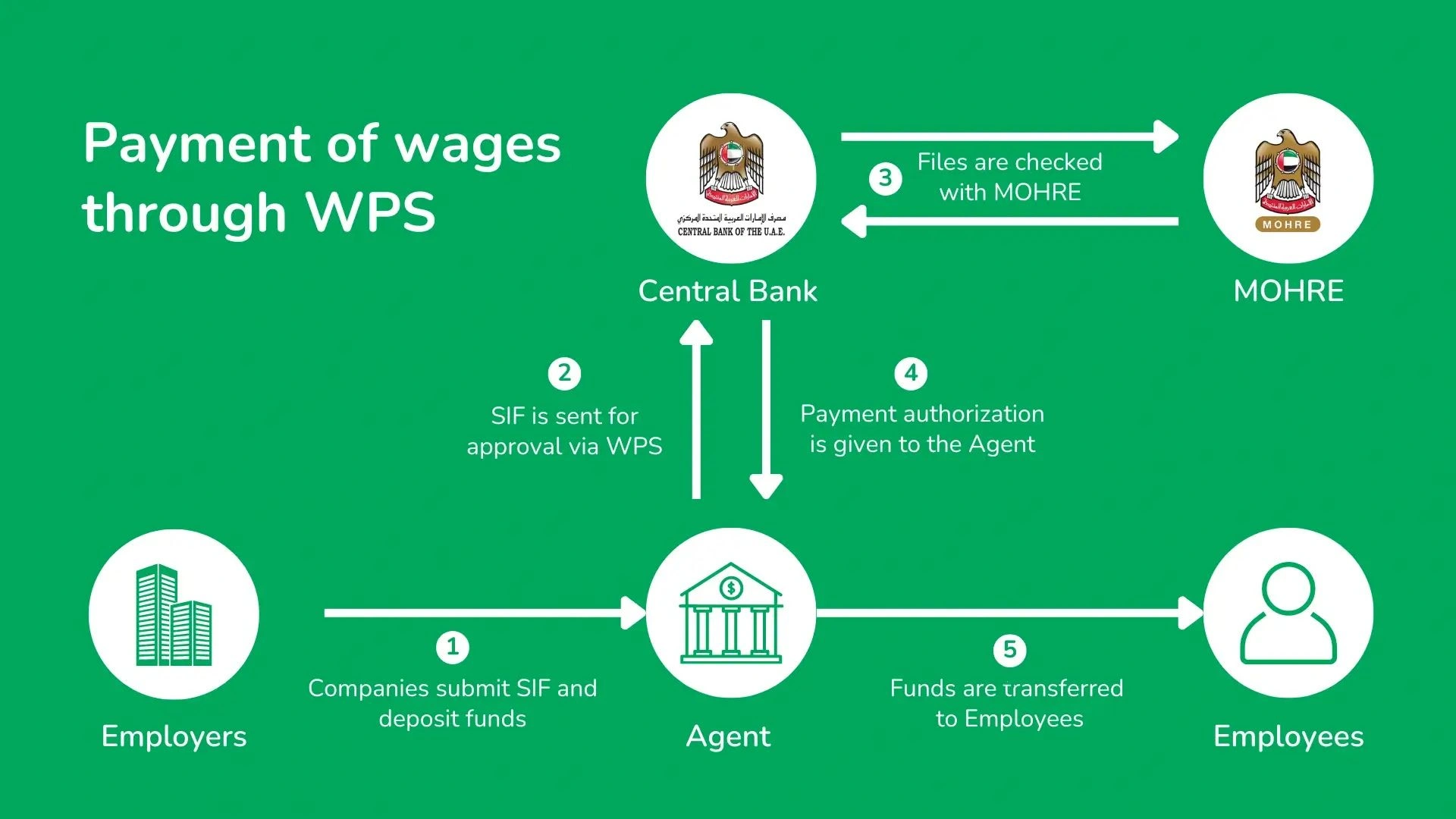
The WPS reporting system follows a fixed set of procedures that connect all employers with banks and government agencies.
- The Salary Information File (SIF).
The Employer creates and submits a Salary Information File (SIF) that contains the following data:
- employee identification numbers
- bank account or payroll card numbers
- salary amounts
- payment date
This data will need to match the salary in the employee contract.
- The Authorised Agent Submission
Employer sends the Salary Information File to a WPS-approved financial institution (i.e., bank, exchange house).
Financial institution verifies the Salary Information File and then forwards it to the MOHRE.
- Government Monitoring
Ministry of Human Resources and Emiratisation (MOHRE) receives payroll data and monitors whether the salaries are being paid: on time, in full, and as per the employment contracts.
MOHRE creates and maintains a database of wage payments made in the private sector.
- Salary Transfer to Employee
Salaries will be transferred into the employee’s bank account, payroll card, or other approved providers once the Salary Information File has been accepted. This guarantees that employees will be paid electronically rather than via cash.
WPS compliance requirements for employers
Companies have to comply with multiple standards to be compliant with WPS regulations.
1. Must Use the Wages Protection System for Payroll Processing
The majority of private sector employers who are registered with MOHRE are required to pay wages using the WPS system.
2. Must Pay Employee Salaries at Minimum Thresholds
Employers must process at least 90% of an employee’s salary via the WPS on a monthly basis.
3. Must Comply with Employee Coverage Requirements
Employers are required to remit at least 90% of the salaries of their workers with respect to 90% of their workforce via the WPS for compliance checking.
4. Must Pay Employees within Agreed-upon Payment Periods
Employees should expect to receive their salaries within the agreed-upon payment window. In this regard, salaries should generally be paid no later than 15 days after the payment due date.
Delays in the payment of salaries may result in the imposition of penalties or an investigation by the government.
Penalties for WPS non-compliance
Penalties applicable to employers who do not follow the regulations outlined in the Wages Protection System (WPS) include:
- Penalties for the late payment of wages
- Suspension of work permits
- Restriction on the ability to hire employees
- Legal proceedings in certain extreme cases
These penalties are intended to encourage employers to provide continuous compliance with respect to payroll.
Benefits of the WPS system
The WPS system provides benefits to both employees and employers.
1. More Transparent Payroll Processes
Government oversight ensures that your pay aligns with what you have been promised within your employment contract.
2. Fewer Labour Disputes
Digital tracking of salaries allows for quicker resolution of disputes.
3. Better Worker Protection
You will feel confident in knowing that you will be paid your wages on time and that they will be safe.
4. Higher Compliance with Labour Laws
The WPS system will help businesses comply with all requirements related to payroll processing and reporting.
5. Increased Efficiency in Payroll Management
With salary payments being made through electronic means, there will be less administrative work associated with payroll and fewer payroll mistakes made manually.
FAQs
1. What is WPS?
The Wage Protection System (WPS) is a federal electronic payroll system designed to ensure employees receive their Salaries on time and in accordance with their Employment Contracts.
2. Is WPS required to be used by companies in the UAE?
Yes. Most Private-Sector Companies in the UAE registered with MOHRE must process their Employees’ Salaries using WPS.
3. How many Employees are enrolled in WPS?
WPS currently has over 99% of Private Sector Workers as participants in the system, making it one of the largest Payroll Monitoring Systems in the Region.
4. What happens to Employers who do not use WPS?
The penalties for not using the WPS for Wage Payments include potential fines, loss of Work Permit, and other Legal consequences.
Also Read:
Saudi Labour Law: Employment Contract Essentials in KSA