
Recruitment in Oman has a distinct and structured method of operation that is established primarily due to various Legislation, Omanization Policies and the increased reliance on expatriates.
When hiring in the Sultanate of Oman, companies must find a solution that satisfies both hiring efficiency and compliance with regulations, e.g., work permits, quota of Omanis employed, and execution of government reporting requirements.
In 2024, the Omani labour market is large and diverse; there will be approximately 2.69 million individuals participating in the labour force, according to World Bank estimates.
In addition, expatriates are a significant contributing factor to the labour pool, as there were an estimated 1.81 million foreign workers employed in Oman in 2025.
This article examines the general recruitment process in Oman, highlights the main steps within that process, includes statistics related to that process, and provides examples of best-practice methods for achieving successful hiring outcomes.
Why recruitment is important in Oman
The process of recruitment is crucial to Oman’s economic development and its planning of future workforces.
When hiring employees in Oman, there are some important aspects to consider when looking at the labor market:
- Approximately 2.5 million individuals comprise Oman’s labor force. Of that population, there are approximately 1.7 million expatriates and 0.8 million Omanis.
- Around 85%-90% of employees in the private sector are foreign nationals; this shows Oman’s heavy reliance on foreign workers to fill jobs.
- Out of the approximately 1.42 million expatriate employees, 413,946 are recently hired Omanis in many private sector jobs.
Because there are so many more expatriates than Omani nationals in the private workforce of Oman, having a structured recruiting plan for both local and international applicants would help keep a balanced workforce.
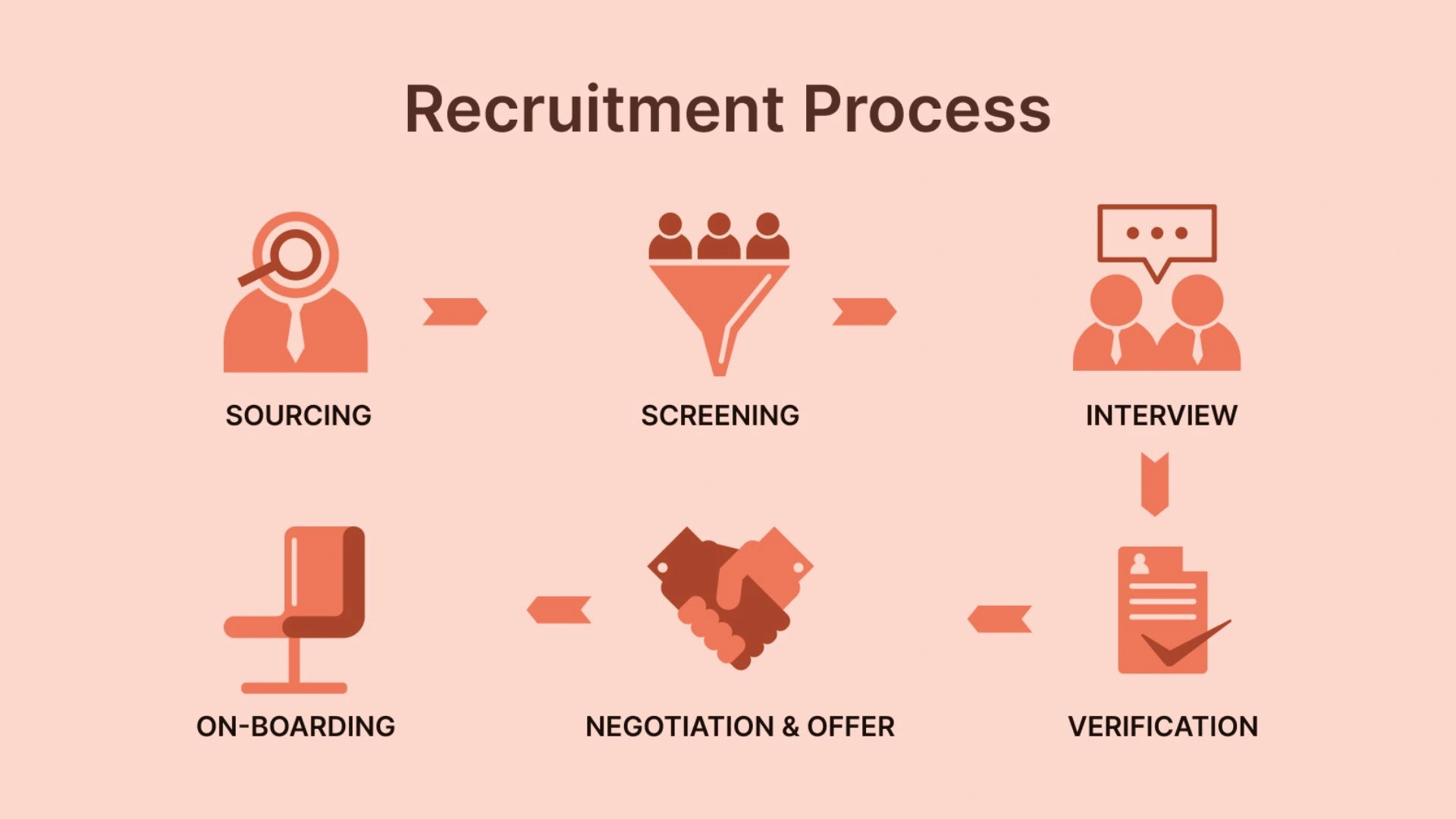
Key stages of the recruitment process in Oman
Define the Job Role and Plan for the Workforce
This is the first step that involves defining the job role and planning the workforce required for the job role. The first step includes the following:
- Analyzing skill gaps
- Performing detailed job descriptions
- Determining the salary and benefits of the job
- Determining whether the job role meets the Omanization quotas.
Defining the job role makes the hiring process easier and reduces delays as well as the chances of hiring the wrong candidate.
Attracting Candidates
After defining the job roles, employers will try to attract candidates to fill those roles using different sources. Typical sources of candidates to fill these roles are:
- Online job boards
- Networking (LinkedIn, Facebook, etc.)
- Recruitment agencies
- Employee referral programs.
Due to the high number of expatriates employed in most industries, it is common that the recruitment for the particular positions has to be done internationally.
Screen and Short List Candidates
After the receipt of the applications for the particular job, the HR department screens the candidates. The most common ways for candidate screening are:
- Review of resumes
- Initial HR telephone interviews
- Skills tests or technical assessments
- Verification of qualifications.
The screening process is essential to HR because it allows HR to review and manage the large number of applications and identify the best candidate(s) for the position.
Candidate Interview & Assessment
After initially screening candidates, they must participate in a series of standardised interviews to determine if they possess the skills necessary to perform the job.
Interviews can be conducted in various ways, such as:
- Technical Interviews
- Hiring Managers Conducting Panel Interviews
- Experience-Based or Competency-Based Assessment Methods
These interviews are conducted to ensure an applicant possesses the technical skills required and has the right fit within the organisation’s culture.
Work Permit/Visa Process
To hire an Expatriate worker, employers must obtain the necessary approvals prior to beginning employment with Expatriate workers.
The work permit and visa process includes the following requirements:
- Approval of the work permit from the Ministry of Labour
- Issuance of the employment visa
- Medical examination
- Residency permit processing
Completion of these activities allows for employment contracts to be issued to Expatriate workers, thereby providing them with the legal authority to work in Oman.
Omanization and its impact on recruitment
One of the most significant influences on recruiting in Oman is the Omanization policy to promote the employment of Omani nationals.
As an illustration, approximately 1,000 large firms are employing approximately 200,000 Omani citizens and 245,000 foreign workers, which gives an overall Omanization rate of about 44% for firms in Oman.
Therefore, an employer faces constrained capacity to fulfill:
- The number of local workers available for work
- The number of foreign workers available for hire
- The number of workers needed in specialized fields
Non-compliance with Omanization will result in the ineligibility of the employer to recruit foreign workers.
Best practices for recruitment in Oman
The following key strategies will help companies achieve improved hiring results:
- Understand Omanization Requirements
Ensuring compliance with national hiring quotas that are sector-specific.
- Define Job Roles Clearly
A clear definition of the job ensures minimal mismatch and hiring delay.
- Utilize Multiple Recruitment Channels
This would ensure that the chances for the best candidate to be selected for a particular position were maximized.
- Conduct Structured Interviews
This would ensure that the best decisions were made while recruiting the candidates.
- Allow for Visa and Compliance Timeframes
Having enough time for the processing of permits and residency permits.
FAQs
- How many people make up Oman’s workforce?
Last count showed Oman’s workforce stood at around 2.69 million people by 2024.
- How many expatriates work in Oman?
One point eight one million foreign workers held jobs in Oman during 2025, showing how deeply the nation depends on outside manpower.
- What is the importance of Omanization in shaping hiring practices?
Putting Omanis first in jobs helps fill positions locally while slowly cutting the need for outsiders. Workers from within the country get more chances now that systems are shifting away from hiring globally.
- What industries depend heavily on foreign employees?
Construction, tourism, and real estate usually see fewer locals joining the workforce; foreign workers fill many roles there. While some sectors grow fast, these tend to pull skilled people from abroad rather than homegrown candidates. National involvement stays limited, meaning outside experts keep things running more often than not.
Also Read:
End-to-End Recruitment Process
Omanization vs Emiratisation vs Bahrainization