
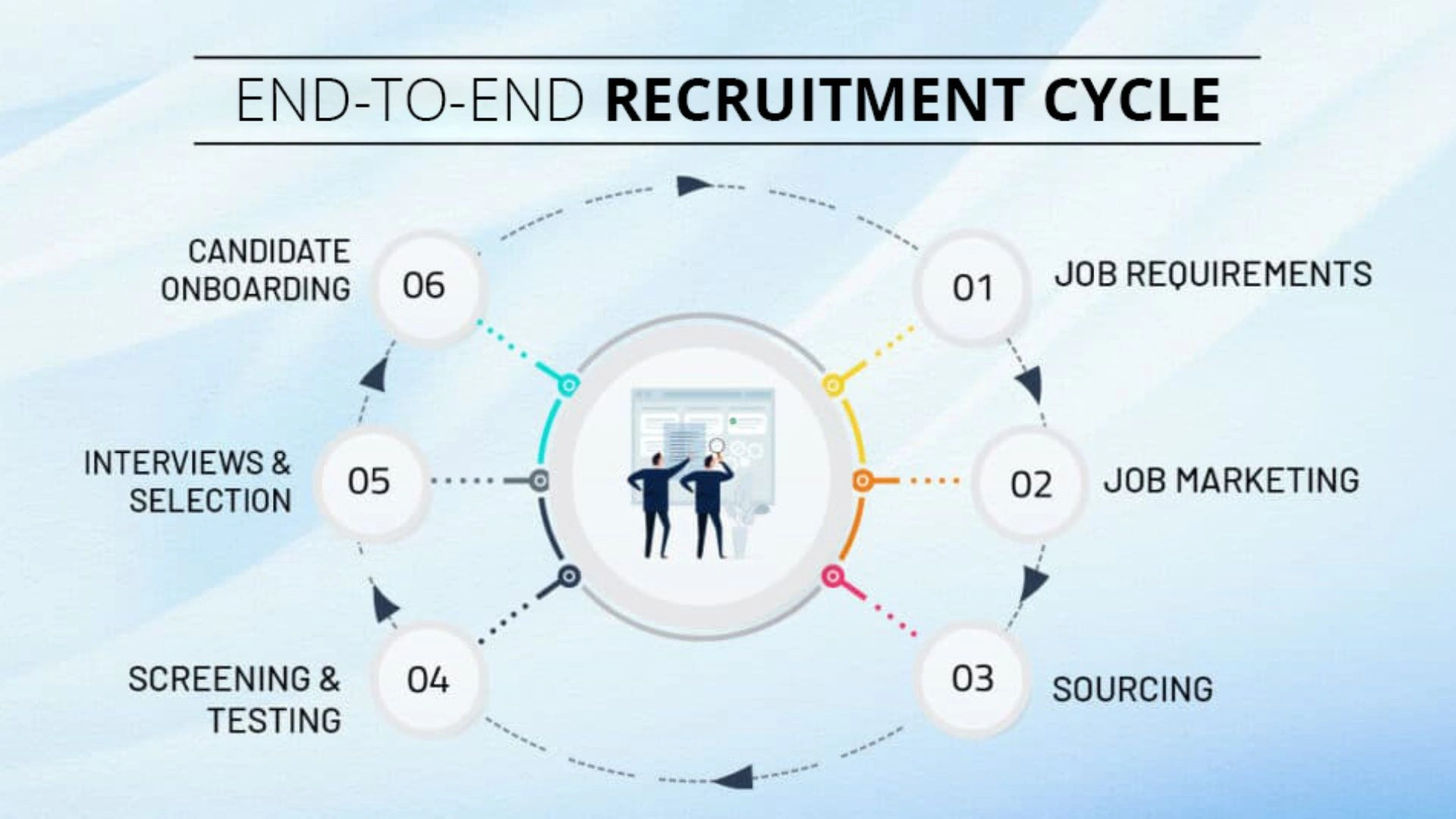
The end-to-end recruitment process covers the complete hiring cycle, from recognising a job opening to bringing a new team member on board and evaluating their initial work. Conceptually, it is a big-picture approach that helps the hiring function be effective, comply with regulations, and support business objectiv
Getting to know this process, as well as the figures related to it, can lead to better hiring results and lower expenses.
This post is an overview of the end-to-end recruitment process, what it is, why it is important, the usual steps that are part of it, real statistical benchmarks, and how to make it more efficient for greater results.
What is the end-to-end recruitment process?
An end-to-end recruitment process is a comprehensive, orderly series of steps used to find the perfect person for a vacant job. The very first step is realising the need to hire, and the very last step is a new employee hitting their stride.
It guarantees a level of consistency, quality of hire, the candidate’s experience, and efficiency of operations. It is a method that closely integrates workforce planning till recruitment and also post-hire functions like employee onboarding. In doing so, it unites strategy, operations, and analytics into a single, cohesive system.
Why a structured recruitment process matters
Recruitment is far more than advertising a job vacancy. If you don’t have a well-defined process:
- Positions might remain unfilled for a long time, thus causing loss of productivity and revenue
- Candidate experience may get compromised, resulting in candidates dropping out
- Poor hiring decisions become a possibility, thus increasing staff turnover
- Cost overrun happens due to inefficiencies
Just to mention, the worldwide average time to fill a job is about 42 days, and the average cost per recruit is around $4, 700 thus illustrating how recruiting delays and expenses can be a drag to your profitability.
Besides that, almost 75% of the employers admit that they struggle to get their positions filled, which emphasises the necessity of a good and efficient recruitment process.
What are the core strategies of the end-to-end recruitment process?
Below is a typical hiring process that most companies go through when recruiting.
Workforce Planning & Job Requirement Definition
The very first phase is figuring out whether a position has to be filled, e.g, in case of expansion, hiring needs, or new initiatives.
Some of the crucial tasks here are:
- Pinpointing the skill gaps,
- Outlining the duties of the job,
- Specifying the performance criteria,
- Deciding on the salary and benefits
Well-communicated job descriptions and requirements not only make the job easier for the hiring manager but also streamline screening and interviewing processes.
Sourcing & Attraction
If the position is well-defined, then the next step moves towards attracting the right people for the job.
Different sourcing channels are:
- Job boards and career sites,
- Social media and professional networks,
- Employee referrals,
- Recruitment agencies or RPO partners
Effective sourcing helps in getting a good quality and diverse pool of candidates, and shortens the hiring process as well.
Screening & Selection
At this stage, the company determines who fits the role best:
- Reviewing resumes
- Initial phone or video interviews
- Skills assessments or tests
- Structured competency interviews
Screening takes up a significant part of recruiting; candidate screening is frequently reported as the most time-consuming aspect of the hiring process.
Interviewing & Evaluation
Candidates who are successful at the first stage are allowed further interviews.
Best practices encompass:
- Standardised interview scorecards
- Structured question sets
- Hiring team calibration
- Score aggregation for objective decision, making
Normally, the company interviews a candidate 2-3 times before deciding to make an offer.
Offer & Negotiation
Upon selecting the preferred candidate:
- Send a formal offer
- Talk about salary, benefits, and start date
- Adjust terms, if necessary, through negotiation
A quick offer turnaround greatly improves acceptance rates. Candidates receiving timely communication are much more inclined to accept.
Background Checks & Onboarding
Recruiting successfully is not just about giving the offer.
This last stage is made up of:
- Background and reference checks
- Contract administration
- Orientation and onboarding
- First, month performance tracking
Onboarding that works is a great contribution to retention. Those companies that have a planned onboarding program normally experience even more new hire retention.
How to improve your end-to-end recruitment
Here’s a practical approach to streamlining and making your hiring process more effective:
- Set up a comprehensive hiring plan
Lay out the job specifications, evaluation criteria, and the approval workflows.
- Make the most of technology and automation
Applicant tracking systems (ATS) can free up to 25% of your time from administrative tasks.
- Employ data analytics
Measure where you get the most candidates, identify bottlenecks, and calculate conversion rates.
- Focus on candidate experience
Giving the candidates clear timelines and keeping them informed will greatly lower the chances of candidates dropping out.
- Normalise interview and test tools
Using formal interview techniques helps to bring in more fairness and raise the level of the candidates selected.
- Give onboarding a lift
Excellent onboarding leads to better retention and quicker achievement of the target output.
- Regularly check performance indicators
Fine, tune the process by using data and feedback.
FAQs
1. What differentiates time to hire from time to fill?
Time to hire measures only the time length from a candidate’s application to the candidate’s offer acceptance; on the other hand, time to fill a vacancy is a metric that tracks the whole life of a vacancy from the posting of the job opening until the candidate accepts the offer.
2. How long does a recruitment cycle typically take?
There is a wide variation in the duration of the recruitment process since it depends on role complexity and sourcing channels; however, if we consider industry benchmarks, they suggest a period between 24 and 42 days on average.
3. Why is cost per hire important?
It is important because it shows the total amount of money spent in getting a candidate from the pool of applicants, through evaluation, to successful onboarding, thereby helping reveal whether the process is efficient or not.
4. What’s a good candidate experience metric?
When candidates drop out of the hiring process in low numbers, the communication is fast, and the offers are accepted more often, these are all signals that the candidate experience was positive.
Also Read:
Best Manpower Supply Company in Bahrain for Construction
Top 8 Questions to Ask Before Hiring a Staffing Agency