
Simply attracting more applicants will not be enough if you want to optimise your hiring funnel in 2026. A hiring funnel will only be considered optimised if you manage to attract qualified applicants and keep those applicants engaged at every step of the process. The purpose of your hiring funnel is to offer a better candidate experience, going through initial attraction all the way to onboarding.
By having a clear picture of the steps that candidates took during the hiring process, you will be able to figure out the stages where good candidates drop off from your hiring funnel and which areas of your recruitment process are less strong.
What are the ways to Improve Your Recruitment funnel?
Map and Diagnose Your Current Recruitment Funnel
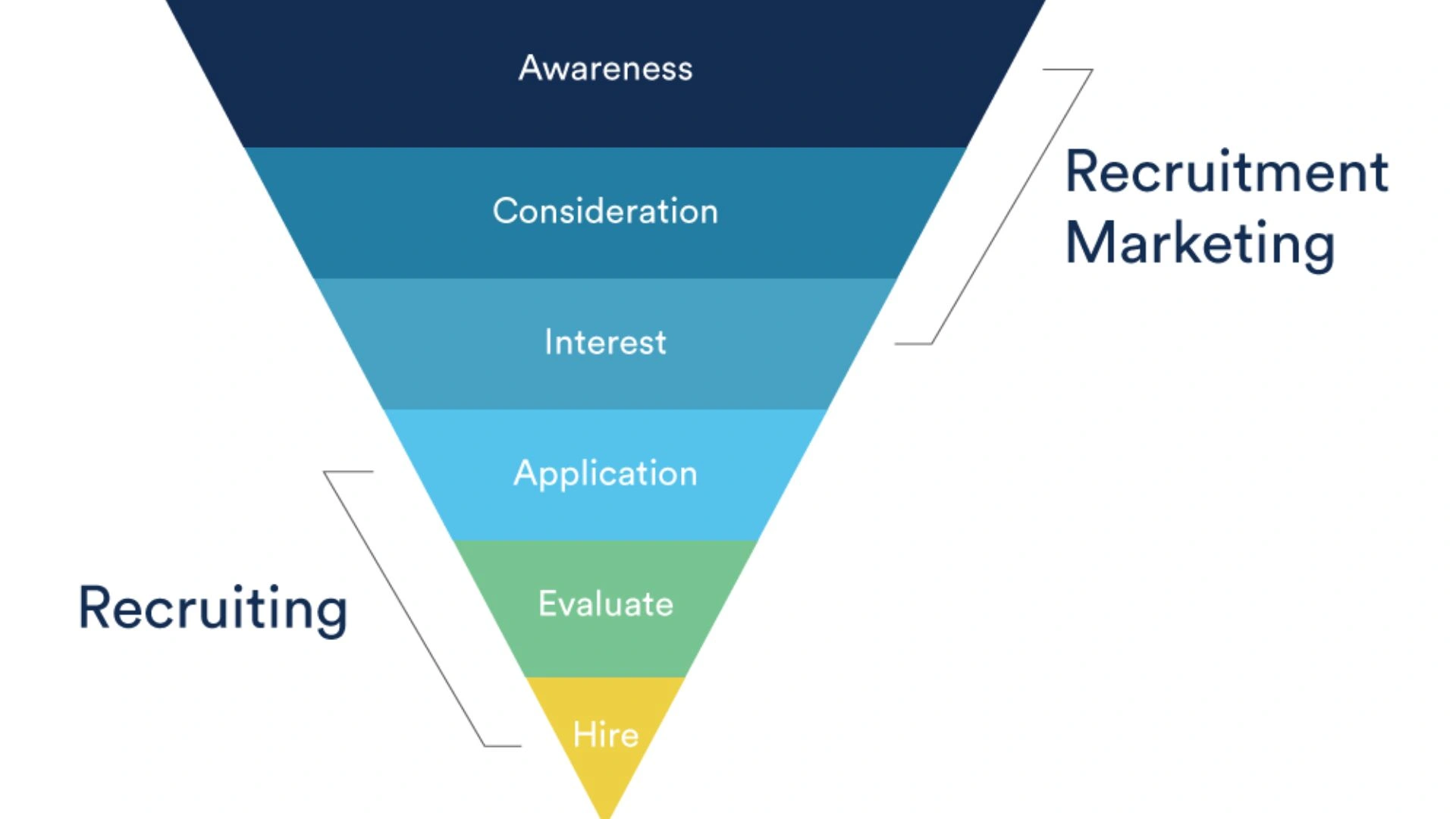
To start, it helps to create distinct stages for your hiring funnel, allowing you to track how candidates progress through it. You can break these stages into: awareness, application, screening, interviewing, offer, and onboarding.
Additionally, you should calculate the conversion rates from one stage to the next (e.g., how many view the job vs how many apply; how many candidates interviewed first lead to an offer?).
Analysing the data will help you determine where candidates drop off or stall. After gaining this insight, it is a good idea to discuss it with both hiring managers and candidates who have recently interviewed for the same position. This will help you determine the reasons behind the previously identified issues in your hiring funnel based on feedback from both sides.
You will likely find that rapidly identifying common problems, such as poorly written job descriptions, a slow response process, or having an excessive number of interview rounds, is relatively straightforward once you have gathered data and solicited feedback.
Strengthen the Top of the Funnel with Better Job Design and Branding
The strength of a recruitment funnel is directly tied to the quality of candidates you bring in. With more selective and research-driven candidates looking for jobs in 2026, generic job descriptions and vague postings do not meet expectations. Each position needs to include very specific responsibilities, required skill sets, and realistic chances for advancement, and your unique selling proposition as an employer.
An employer’s brand should be evident in all places candidates find out about you, including the employer’s website, social media sites, and job boards. By using true employee stories, culture snapshots, and honest information about how employees experience pay and benefits, you are appealing to the types of candidates most aligned with your values, ultimately driving a reduction in the number of mismatched applicant experiences.
Simplify the Application Process
A lengthy or difficult application process is the quickest way to turn away strong applicants. In 2026, many applicants will complete applications via their phones, and they expect to see simplified applications with little to no superfluous fields, no duplication of entering the same information (for example, entering your name and address) across multiple screens, and CV attachments that include a few essential questions instead of lengthy questionnaires.
If possible, indicate on the job posting page when applicants can reasonably expect to hear back about their application (for example, “Shortlist candidates will be contacted within seven 7–10 days). Providing applicants with an open and easy application process will create a wide enough funnel for quality candidates while still accomplishing your hiring goals.
Improve Screening with Clear Criteria and Light Automation
Slow or inconsistent screening often leads to loss of candidates at the mid-funnel stage of the hiring process. Clearly define your expectations for each position by using objective criteria that relate directly to the must-have skills, required licenses and certifications, any spoken language requirements, and key markers of relevant experience. To ensure that these criteria are met, have them available as checklists for use when starting to review resumes. You will be able to act on these, moving quickly but not skipping over essential components.
If/where appropriate, consider using tools that allow you to automatically filter applicants based upon text analysis of their resumes (e.g., keyword-based), or use structured questionnaires to gain an initial understanding about how candidates view themselves.
Use these tools in conjunction with applying personal judgment at this point in the process to avoid excluding qualified/suitable candidates who do not meet your qualifications perfectly due to variance from your pre-determined templates.
Make Interviews Structured and Respectful of Time
Hosting excessive amounts of interviews or unstructured conversations has a detrimental impact on your funnel and creates frustration for all participants. Simplifying your interview process (in essence, designing an interview path) such as using a screening call with short question sets, conducting an interview with one panel interview or hiring manager and providing a final interview at the end if applicable, with a prepared set of questions will allow you to conduct your process with a clear purpose, rather than conducting multiple interviews that essentially repeat the same questions/conversation.
By structuring all interviews, you will achieve a level of fairness and comparability among your candidates. Structured interviewing requires that you ask all candidates the same set of core questions in order to improve the level of fairness and to facilitate easier comparisons.
Additionally, interviewers should be trained to concentrate on competencies and real examples, rather than relying solely on their gut feelings. This process will enable you to eliminate bias, thus making better hiring decisions.
How 6 Pence Can Help You Improve Your Recruitment Funnel
Employers looking to build their recruiting systems into 2026 have a unique opportunity to engage 6 Pence as an Extension Plan partner. 6 Pence has broad experience throughout the GCC region and provides employers with expertise on identifying both localised and expatriate candidates. 6 Pence allows employers to:
- Utilise targeted recruitment strategies to identify candidates at the beginning of the hiring process who are best qualified to fill open positions.
- Streamline the screening and short-listing processes by utilising technology that provides both speed and quality.
- Streamline the interview process, offer, and onboarding processes with technology that is efficient, effective, and compliant.
- Provide staffing outsourcing and workforce development options to keep firms nimble while controlling costs of long-term hiring strategy development.
When partnering with 6 Pence, employers develop a reliable recruiting engine that delivers data-driven evidence to help guide hiring earlier in the recruitment process. Partners of 6 Pence will gain access to better-qualified candidates sooner, thereby increasing the overall success of their hiring practices.
Also Read:
Future of Recruitment Automation